Posted: May 25, 2026
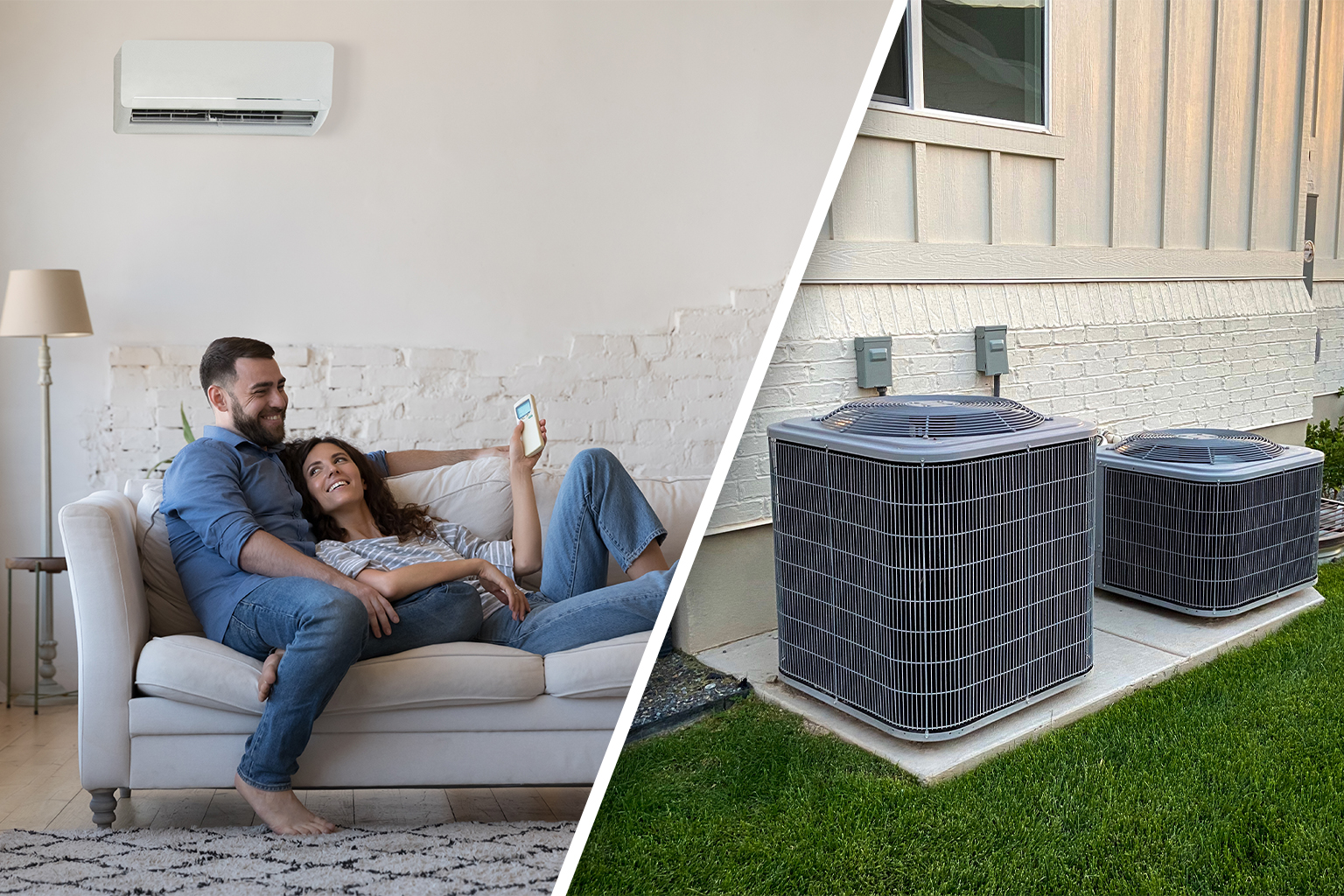 When summer heat settles in, how you cool your home impacts more than just temperature. It influences your energy use, your comfort, and even how your living space feels day to day. If you’re deciding between traditional central air and a ductless mini-split system, the right choice usually depends on your home’s layout, existing equipment, and what you want long term.
Central air conditioning has been the standard for whole-home cooling for good reason. Its biggest strength is consistency. A properly designed system delivers even temperatures throughout the house, so you don’t have to deal with hot and cold spots or constantly adjust settings in different rooms. Everything runs through a single system that distributes cool air through ducts, creating a balanced, comfortable environment from one space to the next.
Another advantage is how discreet central air can be. Most of the interior equipment is hidden away in an attic, basement, or utility area. That means no units mounted on walls or blocking windows, and no impact on your home’s design. Many systems also include built-in air filtration, which can help reduce dust, allergens, and other airborne particles, improving overall indoor air quality.
If your home already has ductwork, especially if you use a forced hot-air heating system, central air is often the most straightforward option. The existing ducts can carry cooled air just as easily as heated air, making installation less invasive and more cost-effective. In these cases, central air provides a seamless solution that integrates heating and cooling into one cohesive system.
However, central air isn’t always practical. For example, homes that rely on boilers typically don’t have ductwork. Installing ducts in an existing home can be a major project, often requiring work behind walls, ceilings, or floors. That added complexity and cost leads many homeowners to consider alternatives.
Ductless mini-split systems offer a flexible solution, especially for homes without ducts. Instead of relying on a central network, mini-splits use individual indoor units connected to an outdoor compressor. These units can be installed in specific rooms or zones, making them ideal for additions, finished basements, or areas that are difficult to cool.
One of the biggest benefits of mini-splits is control. Each indoor unit works independently, allowing you to set different temperatures in different rooms. This zoning capability means you can cool only the spaces you’re using, which can improve efficiency and reduce energy waste. It also makes it easier to meet individual comfort preferences within the same household. Here’s another great benefit: many ductless systems also provide heating, making them a practical option for supporting comfort throughout the seasons. In fact, for our area, we recommend the heating from a ductless system as a backup or as a supplemental heat source.
Installation is typically quicker and less disruptive than adding ductwork. Small conduits connect the indoor and outdoor units, so there’s no need for extensive construction. For many homeowners, that simplicity makes mini-splits an appealing and practical choice.
There are a few trade-offs to keep in mind. Each zone requires its own indoor unit, which will be visible in the room. While today’s models are compact and modern-looking, they still become part of the space. In larger homes, multiple units may be needed, which can increase the overall cost.
If you’re currently using window air conditioners, either choice will be a noticeable upgrade. Window units are often noisy, less efficient, and limited in how much space they can cool. They can also block natural light and affect your home’s appearance. Switching to a permanent system, whether central air or mini-splits, can significantly improve comfort and efficiency.
Ultimately, the best system depends on how you use your home and what kind of comfort you value most. A professional evaluation from us can help you compare options, understand costs, and choose a solution that fits your space and your budget.
At Mitchell, our licensed technicians manage everything from routine maintenance and emergency repairs to full system installations. As a third-generation, family-owned company serving the community since 1945, we’ve built lasting relationships with homeowners throughout parts of Connecticut, including Woodbury, CT, and parts of Westchester County, New York.
Our team brings decades of firsthand experience to every job, helping you stay comfortable and energy-efficient all year long.

Mitchell gives all our customers the dependable, responsive white-glove service that is true to the values we have kept for more than 80 years of serving Western Connecticut and Eastern New York.
See Our StoryHave questions or ready to become a Mitchell customer?
Contact us today to get started!
